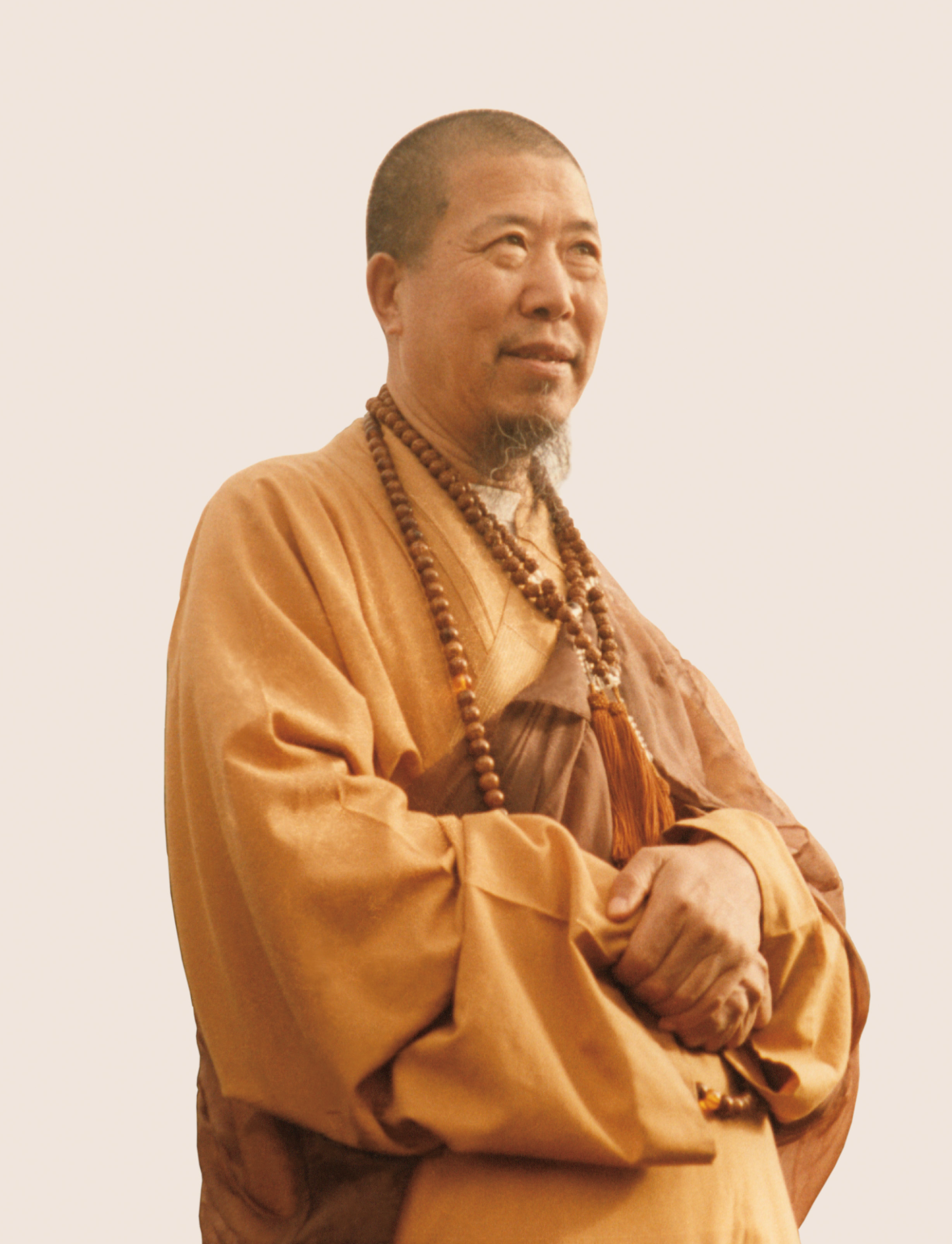
The Venerable Master, given name An Ci and courtesy name Du Lun, received the Dharma transmission from the Venerable Master Xu Yun and was a successor in the Weiyang lineage and received the Dharma name Xuanhua. A native of Northeast China, he was born during the transition from the late Qing Dynasty to the early Republic period.
At nineteen, he left the home life and observed mourning beside his mother’s grave for three years, practicing filial piety. He cultivated Chan meditation and studied doctrinal teachings, took only one meal a day, never lay down to sleep at night, and upheld various pure practices, traveled on foot to seek instruction, and drew near to the Venerable Master Xu Yun and other eminent elders of the time.
In 1949, he arrived in Hong Kong and established Buddhist lecture halls and other practice centers. In 1962, he brought the Proper Dharma to the West, lecturing in the United States on dozens of Mahayana sutras and ascending the Dharma seat to speak the Dharma more than ten thousand times. He was the first to establish the Triple Jewel in America.
Over the years, the Venerable Master founded the Dharma Realm Buddhist Association and numerous affiliated monasteries and institutions. He guided disciples from East and West to practice the Dharma in daily life, trained disciples in sutra translation, promoted education, and supervised the Sangha members in all the Association’s Way-places, forming a Sangha community that truly embodies the practice of the Buddha’s teachings.
On June 7, 1995, the Master entered stillness in Los Angeles, USA. Like the sudden setting of a sun of wisdom, people everywhere mourned his passing; though the great monk manifested stillness, his exemplary conduct endures. Throughout his life, the Master was completely public-spirited and selfless. Through his compassionate and wise teachings, countless people have reformed themselves and set forth on the pure and noble path to Bodhi. Therefore, we respectfully record the verse composed by the Master, “The Long White Mountain Mendicant,” as a guiding model for future generations.
The Mendicant of Chang Bai was simple and straightforward by nature,
Eager to help others, always fearing delay.
For the Dharma he forgot his body, even sacrificing his life;
Prescribing medicine according to illness, giving even marrow and skin.
He vowed to unite the myriad beings as one body,
His practice extending throughout space, adapting to myriad conditions.
Without coming or going, without present existence,
Likewise, without north, south, east, or west.